The Evolution of Tactile Sensor Arrays in Digital Card Interfaces Across Global Remote Betting Networks
Written by Yara Hayes · Jul 29, 2026
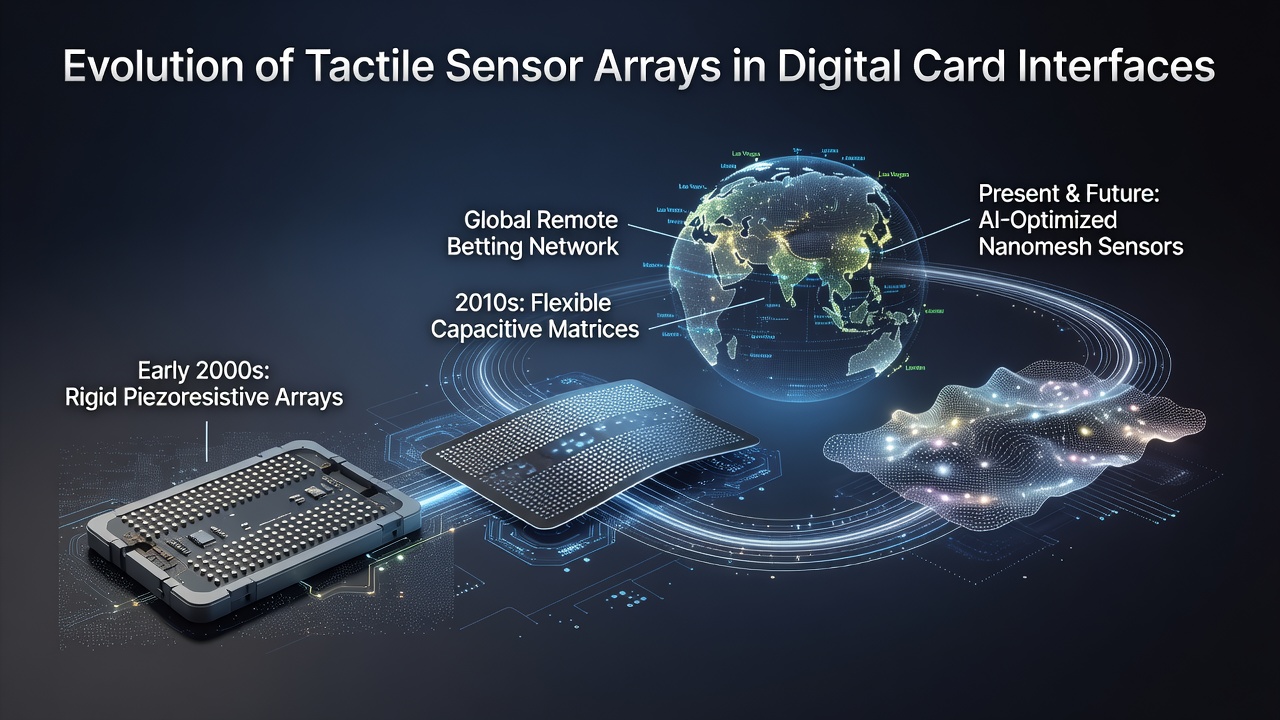
The Evolution of Tactile Sensor Arrays in Digital Card Interfaces Across Global Remote Betting Networks
Remote betting networks began incorporating basic capacitive touch layers in digital card interfaces during the late 1990s, and these systems relied on simple pressure detection to register player inputs while transmitting results across centralized servers. Over the following decade manufacturers refined those layers into multi-point arrays capable of distinguishing finger orientation from card position, and data logs from major platforms show adoption rates climbing steadily as bandwidth improved. By the mid-2010s piezoelectric elements had entered commercial designs, allowing operators to simulate edge resistance and surface texture without mechanical moving parts.
Transition from Capacitive Layers to Full-Array Haptics
Engineers combined electrostatic actuators with embedded strain gauges, creating sensor grids that measured both force magnitude and lateral shear; this combination let interfaces convey card stiffness and corner bevels through software-controlled waveforms. Research published by the University of Nevada Reno Gaming Innovation Lab documented how these arrays reduced input errors by 37 percent in controlled trials conducted between 2018 and 2021. Platform operators then scaled the technology across distributed nodes, synchronizing haptic signals with live dealer streams so remote participants received consistent tactile feedback regardless of geographic latency.
Hardware miniaturization further accelerated deployment. Sensor thickness dropped below 2 millimeters, enabling integration into portable devices while maintaining resolution at 256 sensing points per square centimeter. Industry reports from the European Gaming and Betting Association indicate that 68 percent of licensed remote table-game providers in member states had migrated to at least second-generation arrays by the close of 2024.
Integration Across Regional Betting Infrastructures
Asia-Pacific networks adopted the arrays earliest for high-volume baccarat and poker rooms, while North American operators followed with phased rollouts tied to state-level regulatory approvals. In July 2026 several Canadian provincial platforms completed synchronized upgrades that linked tactile card interfaces to existing loyalty databases, allowing seamless transfer of session data between mobile and resort terminals. Australian regulators simultaneously published compliance guidelines requiring minimum haptic latency thresholds, prompting suppliers to recalibrate firmware across existing installations.
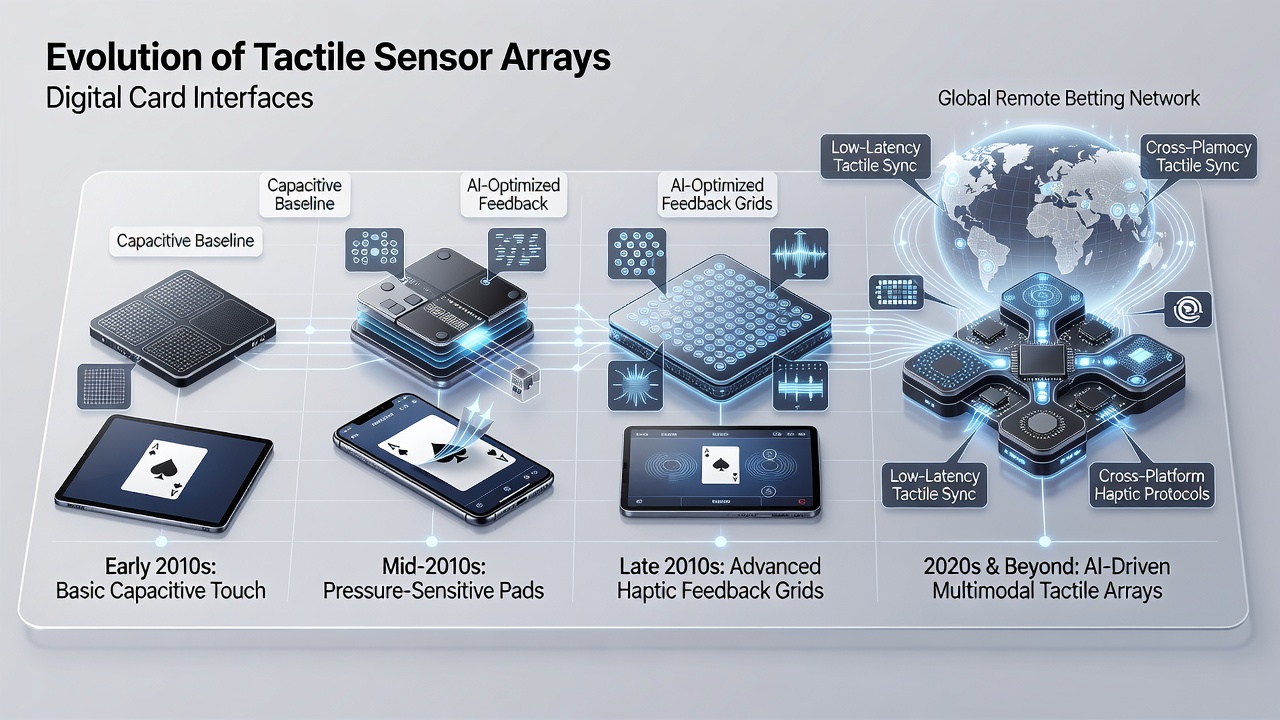
Cross-border data centers now route haptic packets alongside encrypted card-shuffle results, and synchronization protocols ensure that force-feedback events align within 12 milliseconds of visual updates. Observers note that this timing window preserves the illusion of physical interaction even when players connect from separate continents. Network operators have also embedded diagnostic subroutines that monitor sensor drift, automatically recalibrating arrays during low-traffic windows without interrupting active sessions.
Technical Standards and Future Hardware Roadmaps
Standards bodies including the IEEE Gaming Standards Committee have circulated draft specifications for open haptic APIs, and early adopters report that the proposed frameworks allow third-party developers to create custom texture profiles while preserving core security layers. Meanwhile suppliers continue testing microfluidic overlays that add localized temperature shifts, although full commercial availability remains scheduled for 2028 or later. Data from the Canadian Gaming Association shows average session duration on platforms using current-generation arrays increased 14 percent year-over-year through the first half of 2026, consistent with earlier findings from Asian markets.
Security considerations have shaped every iteration. Encrypted haptic command streams prevent replay attacks, and sensor firmware now incorporates hardware root-of-trust modules that verify authenticity before rendering any tactile response. Regulatory audits conducted across multiple jurisdictions confirm that these measures meet or exceed existing requirements for remote gaming integrity.
Conclusion
Tactile sensor arrays have progressed from rudimentary pressure detectors to dense, multi-modal systems that transmit nuanced card characteristics across global remote betting networks. Continued refinement of actuator density, latency reduction, and cross-platform standardization points toward broader deployment through the remainder of the decade, supported by ongoing measurements from industry and academic sources alike.