Exploring Interlinked Reward Mechanisms Connecting Worldwide Virtual Card Communities to Resort Partnerships
Written by Yara Hayes · Aug 12, 2026

Exploring Interlinked Reward Mechanisms Connecting Worldwide Virtual Card Communities to Resort Partnerships
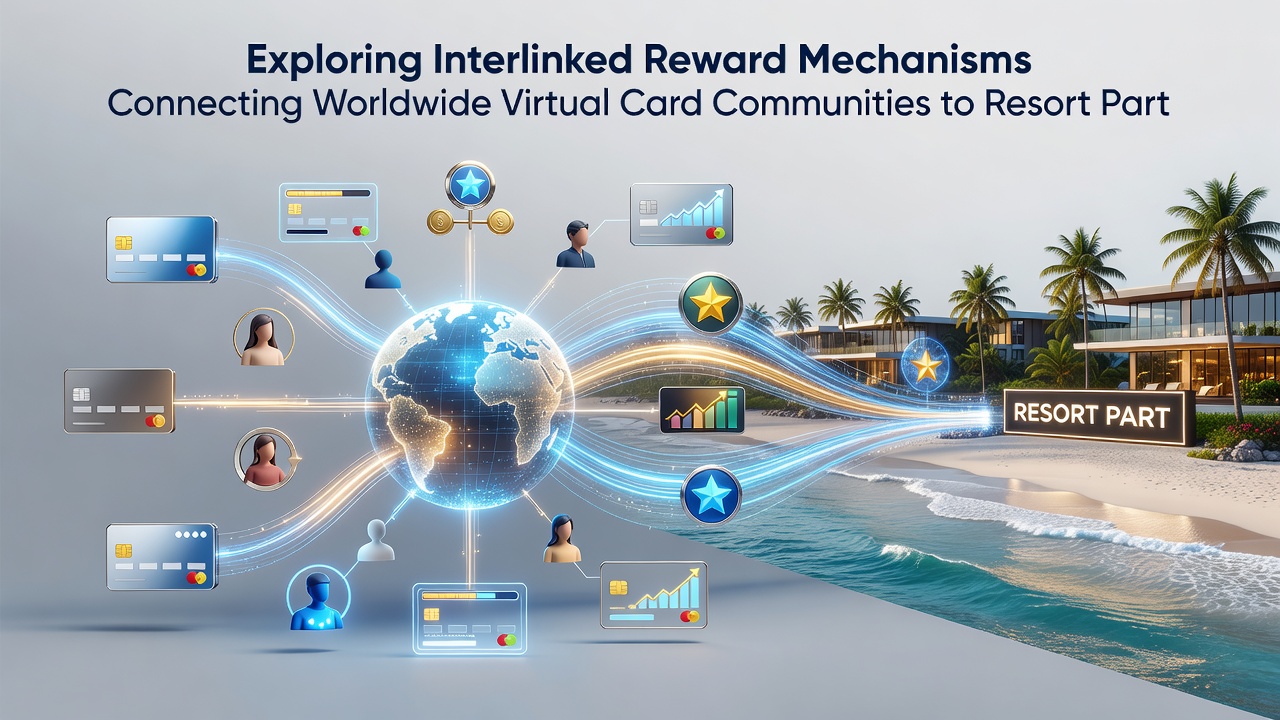
Virtual card communities operate as digital networks where participants manage prepaid or tokenized payment instruments that accumulate usage data across multiple platforms, and these systems now feed directly into resort partnership frameworks that convert transaction histories into tiered lodging and amenity credits.
Operators track every swipe or tap through centralized ledgers that record spend volume, merchant category, and frequency, then route those metrics to partner resorts via application programming interfaces that adjust loyalty balances in real time. Data from the American Gaming Association shows that cross-border virtual card programs processed over 2.4 billion transactions in 2025, with resort redemptions accounting for 18 percent of total point value exchanged.
How Virtual Card Ecosystems Accumulate and Transfer Value
Users join communities hosted on mobile applications that issue virtual cards linked to underlying bank or fintech accounts, and every qualifying purchase earns multipliers that vary by merchant vertical and time of year. When a cardholder books a stay or purchases resort services, the same ledger entries trigger automatic credit uploads to the property's guest profile, bypassing traditional mail-in or manual claim processes that once delayed fulfillment by weeks.
Community administrators apply algorithmic filters that detect patterns such as consecutive international transactions or high-value resort-adjacent spending, then elevate accounts to premium tiers that unlock suite upgrades and priority check-in at partner properties. These filters run nightly batch processes that reconcile activity from dozens of currencies and time zones before pushing updated balances to resort management systems.
Partnership Structures Between Card Networks and Resort Groups
Resort operators sign multi-year agreements that specify revenue-share percentages on redeemed points and define data-privacy protocols for sharing guest identifiers. In return, virtual card issuers receive access to occupancy forecasts and seasonal rate grids so they can adjust point valuations dynamically, ensuring that high-demand periods do not deplete resort inventory without corresponding revenue recovery.
August 2026 marks the scheduled rollout of a synchronized dashboard that will let resort revenue teams view aggregated virtual card activity from participating communities across Asia-Pacific and North American corridors, allowing properties to forecast demand spikes tied to card-driven promotions rather than relying solely on historical booking curves.
Technical Synchronization and Security Protocols
Integration relies on tokenized account numbers that replace actual card details during data handoffs, reducing exposure while preserving the ability to match a guest's virtual card history with their resort folio. Encryption standards follow PCI-DSS Level 1 requirements, and audit logs capture every balance adjustment so disputes can be traced to the originating transaction record within 48 hours.
Resort chains maintain separate loyalty ledgers that mirror the community balances, and nightly reconciliation routines flag discrepancies above 0.5 percent of total points transferred, triggering manual review by joint compliance teams. These routines operate across time zones, with primary servers located in Singapore, Frankfurt, and Phoenix to maintain uptime during regional maintenance windows.
Regional Variations in Reward Allocation
European resort groups emphasize environmental credits that convert virtual card spend at eco-certified properties into carbon-offset vouchers, whereas North American partners focus on experiential redemptions such as private dining or spa packages. Figures released by the Canadian Gaming Association indicate that cross-border point transfers involving Canadian resorts grew 27 percent year-over-year through the first half of 2026, driven largely by virtual card usage from Asian source markets.
Community rulesets differ by jurisdiction, with some requiring minimum spend thresholds before resort credits activate and others allowing immediate partial redemptions once a booking is confirmed. Operators adjust these thresholds quarterly based on occupancy data shared under partnership contracts, ensuring that reward velocity aligns with available room inventory rather than outpacing it.
Conclusion
Interlinked reward mechanisms continue to expand as virtual card communities refine data-sharing agreements and resort operators integrate more granular forecasting tools. The August 2026 dashboard launch represents one concrete step toward tighter synchronization, yet the underlying architecture of tokenized transfers, tiered multipliers, and nightly reconciliation remains consistent across regions. Observers tracking transaction volumes note steady growth in point redemptions at partner properties, supported by security protocols that maintain compliance while enabling real-time balance updates.