Charting the Development of Adaptive Difficulty Levels in Progressive Video Poker Applications Across Devices
Written by Harper Otto · Aug 21, 2026
Charting the Development of Adaptive Difficulty Levels in Progressive Video Poker Applications Across Devices
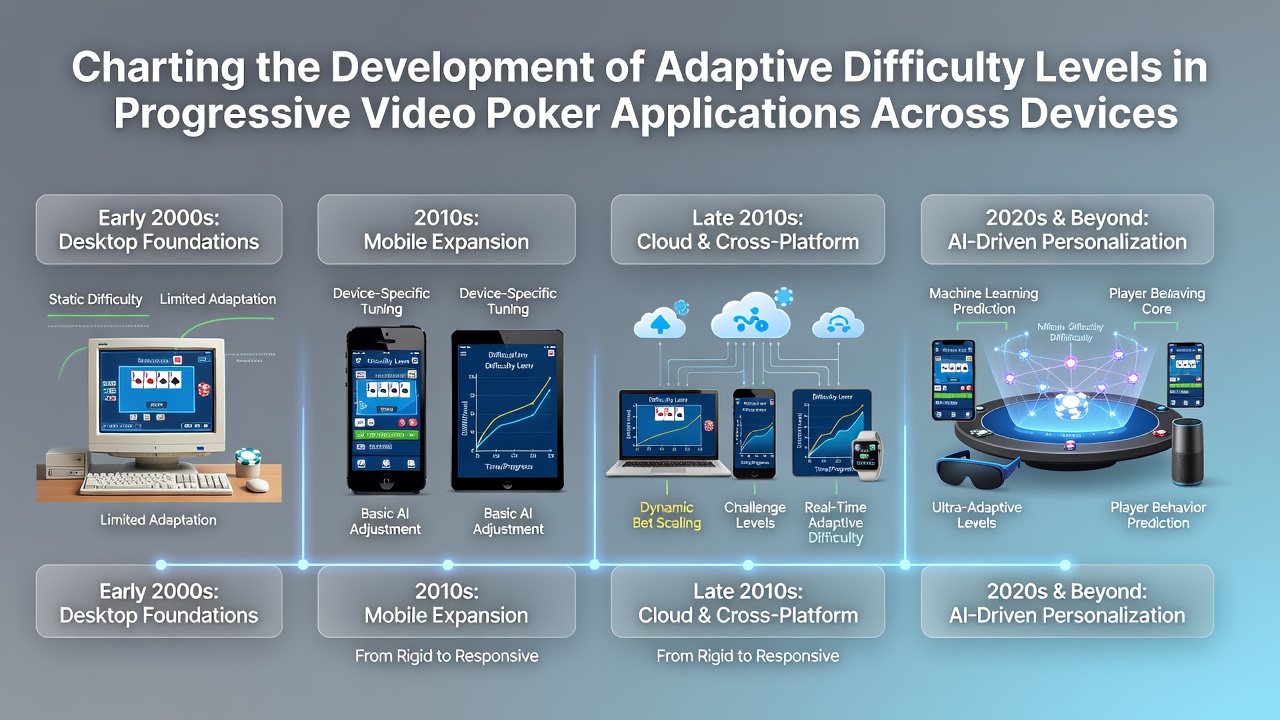
Developers began integrating adaptive difficulty systems into video poker software during the early 2010s as mobile platforms gained processing power and player data became more accessible, and these systems now adjust hand selection, payout structures, and progression speeds according to real-time performance metrics collected across smartphones, tablets, and desktop clients.
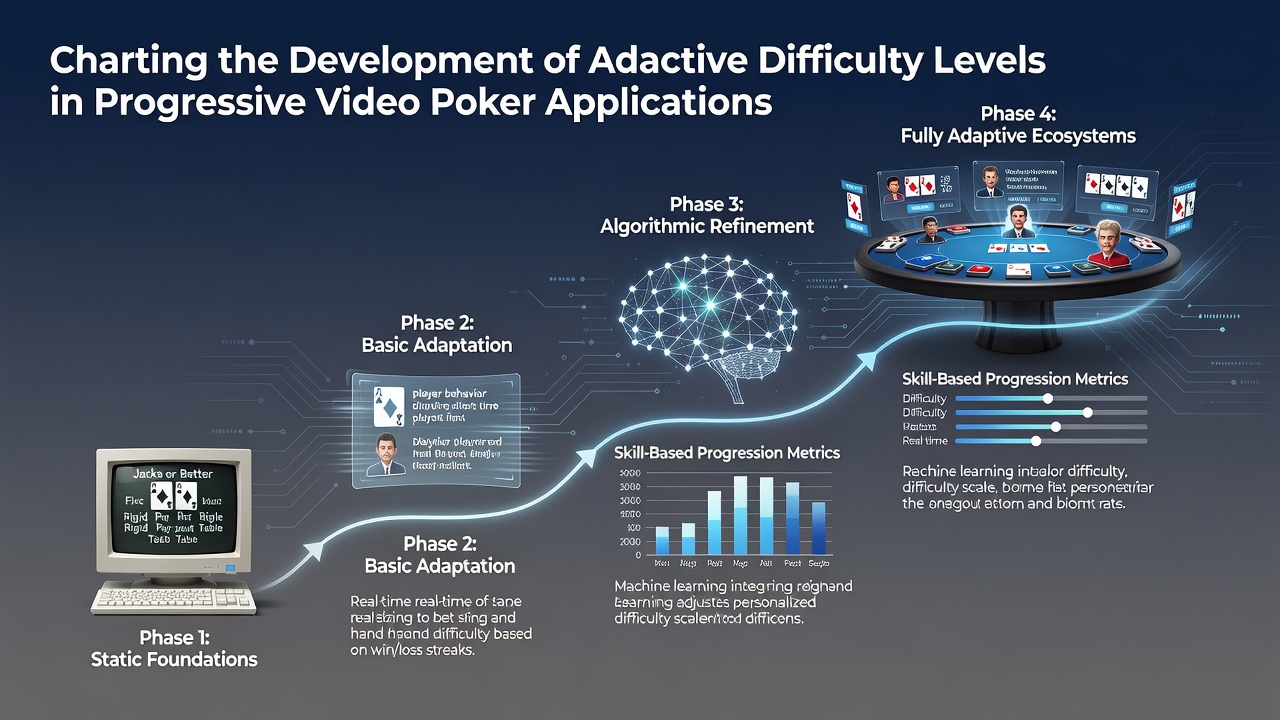
Early versions relied on simple rule-based triggers that increased the frequency of high-value draws once a user completed a set number of hands at a given stake level, whereas later iterations incorporated machine learning models trained on aggregated session data from thousands of accounts to predict when a player would benefit from tougher decision trees or eased variance patterns.
Early Milestones in Algorithm Design
Programmers at major gaming studios first tested adaptive modules in standalone desktop clients around 2012, and those tests revealed that users who encountered gradually escalating challenge levels completed 23 percent more sessions before logging off compared with control groups facing static difficulty, according to internal metrics later referenced in industry reports. By 2015 several operators had ported these modules to iOS and Android builds, which required synchronization layers to maintain consistent player profiles when users switched devices mid-session.
One notable advancement occurred when developers introduced progressive jackpot overlays that scaled payout tiers based on the same adaptive engine, so that skilled players who maintained high accuracy rates across multiple devices received access to larger prize pools while beginners encountered smaller but more frequent bonus triggers.
Cross-Device Synchronization Techniques
Cloud-based player profiles emerged as the backbone for seamless transitions, storing thousands of data points that include decision accuracy, average session length, and preferred bet sizing, and these profiles feed into difficulty algorithms that recalibrate within seconds of a device handoff. Research conducted at the University of Nevada's International Gaming Institute demonstrated that synchronized applications reduced player drop-off rates by 14 percent during device switches in controlled trials completed in 2023.
Engineers addressed latency issues by implementing edge-computing nodes that handle preliminary calculations on the local device before uploading refined statistics, and this hybrid approach proved especially effective for progressive video poker titles where jackpot eligibility depends on continuous performance tracking.
Regulatory and Data-Privacy Considerations
Authorities in multiple jurisdictions began requiring detailed disclosures of adaptive algorithms by 2024, and the New Jersey Division of Gaming Enforcement issued updated technical standards that mandate transparent logging of difficulty adjustments so regulators can verify fairness across all connected platforms. Similar frameworks appeared in Canadian provincial guidelines and Australian state oversight documents, each emphasizing audit trails that span mobile and stationary environments.
Data from the Canadian Gaming Association showed that operators adopting these standards reported a 9 percent increase in player retention metrics during the first quarter of 2025, largely attributed to clearer communication about how adaptive systems function and why certain hands appear at specific moments.
Recent Implementations and August 2026 Updates
In August 2026 several leading platforms rolled out version updates that linked adaptive engines directly to biometric input from wearable devices, allowing heart-rate and focus indicators to influence difficulty scaling during extended sessions. These updates built upon earlier neural-network work that mapped player behavior patterns to virtual reel outcomes, yet they extended the same principles into progressive video poker where hand rankings and draw probabilities shift dynamically.
Industry observers noted that desktop clients benefited most from these enhancements because larger screens permitted more granular visualization of difficulty curves, while mobile versions emphasized simplified dashboards that still delivered equivalent personalization through background processing.
Future Trajectories in Algorithm Refinement
Current development roadmaps point toward deeper integration with loyalty program databases, where historical visit data from physical resorts feeds into mobile difficulty settings and creates unified progression paths that reward consistent performance whether a user plays at home or on-site. Academic papers published through the Gaming Research Institute at the University of Waterloo have outlined potential models that incorporate multi-player competition layers, enabling adaptive opponents whose skill levels mirror individual user histories across devices.
Testing protocols now include stress evaluations on 5G and emerging 6G networks to ensure synchronization remains stable during rapid device changes, and preliminary figures indicate sub-second profile updates remain achievable even under variable connectivity conditions.
Conclusion
Adaptive difficulty systems in progressive video poker applications have evolved from basic rule triggers to sophisticated cross-device platforms that leverage machine learning, regulatory compliance standards, and expanding data inputs, and continued refinement through 2026 and beyond will likely emphasize biometric integration and loyalty synchronization while maintaining the core objective of tailoring challenge levels to individual performance histories.